Different Models for Teaching Actions
How you can go about teaching someone how to do something

Anand K Jain
Chief Learning Strategist, EdCrafter
6 min read

Let's say you want to teach someone how to do something, like throw a ball, do a dance step, or deliver a presentation.
There are different approaches/techniques you can use to make it happen, which are compiled in this genius paper by Schöllhorn et al., 2022. Let's look at them briefly here.
Approach 1: Repetition Learning (RL)
The most common approach. You act as a role model and show Tara, your learner, how to do it. Then you have her repeat the same exact action till she "gets it.”
“Repeat this serve 50 times.”
With RL, you treat Tara as having a clean slate - her prior experience and state don’t matter. And you assume Tara and Mark learn exactly the same way: through repetition.
This is popular in the military, and highly teacher-dependent.

A fabulous visual used by Schöllhorn et al., 2022 to depict RL: Action A is repeated multiple times (we have recreated it for better visibility here)
2. Discovery-based Learning (DBL)
In this approach, you put Tara in an environment and let her take full charge of her learning--she's allowed to "discover."
It's what psychologists would simplify as learning by trial and error.
“Here’s the tool, figure out how to use it yourself!”
DBL has many offshoots: problem-based learning, experiential learning, constructivist learning, critical thinking, inquiry-based learning, and more.

In DBL, Action A is "discovered" by trial and error.
3. Methodical Series of Exercise
In this technique, you first give simple exercises to Tara - simple for her, that is - and slowly make them more complex to build up to the full action (A).
It's the "easy to difficult" approach.
Tara is not a 'clean slate' anymore, her current skill level is considered.

In MSE, you break action A down into parts and repeat each part till the full action is reached.
4. Variability of Practice - VP
In this approach, you first split the action to learn in parts:
Invariant elements: Parts that don't change - like how to hold the bat, or how to move your arm in a gym exercise.
Variable elements: Parts that must change based on the situation - like the force to use when batting, or the angle of a shot.
Then, you design practice that mixes these elements, sequentially or randomly.


Variability of Practice: The same action A is practiced but the intensity keeps shifting.
Mixing Up Multiple Techniques Together
5. Differential Learning Model
Differential learning is super interesting.
Here, you just add random, unplanned “noise” when Tara is performing so that she has to adapt constantly and get a “sense” of what’s right.
“Present these slides on one leg.”
“Tackle weird sounds from the audience as you present.”
These disturbances are deliberately meant to be unreal - Tara would never present on one leg in the real world. But helping her practice in the noise prepares her for any unplanned situation that arises in the real world!
In DL's purest form, you give no feedback, and let Tara extract her own insights through "chaos" you create.
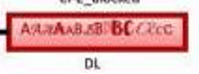
Illustration to depict "noise" in DL.
6. Contextual Interference Model
While DL is about mixing up how one single action is done, Contextual Interference is about mixing multiple skills/actions/tasks either in blocks or randomly.
"Backhand -> Forehand ->Serve -> Forehand-> Serve-> Backhand"
Each skill is still done correctly and cleanly (no noise like in DL); just the sequence in which you practice them is scrambled.

A, B, C are three separate skills, each done the same way, but the order is mixed up
7. Game-based Approach (also called Methodical Game Series)
In this, you start with a simplified version of a game you want to teach - fewer players, a smaller field, or simplified rules - and slowly increase the complexity.
The teacher usually doesn't "teach" an action, like in RL or MSE. It's learned with teammates as you go.

Game-based Approach: How kids learn the words mam, dad, or taxi - by just being in the “game”
Using these Models
That's a lot of different approaches, and we’ve experienced most of them in some way throughout our lives.
Schöllhorn et al., 2022 just give us great vocabulary for thinking about them and applying them when designing a learning program. By applying our best judgment on which model works best for a situation and how to mix them up, we can craft more optimal, meaningful, thoughtful learning.
These models don't just apply for athletes. They work for a customer, an employee, a student, or anyone you're focused on helping learn an action.
The Visual Recap
What I’m most fascinated by is the visual depiction of these techniques.
Go ahead and take a look at them again, to recap, and memorize what RL, DBL, MSE, VP, and DL are!

Also notice how they visualize multiple techniques being mixed together:

Question for You
Which technique (or blend of techniques) would you use for your situation?
© 2026 EdCrafter. All rights reserved.